

Start with the use and artwork
For a detailed full-colour print, shortlist a smooth jersey T-shirt with a flat front. For a stitched left-chest logo, compare a stable piqué polo or a sweatshirt with enough structure to support the design. For outdoor teamwear, check layering room, cuffs and whether the artwork stays visible under a jacket.
Compare fit, GSM and finish
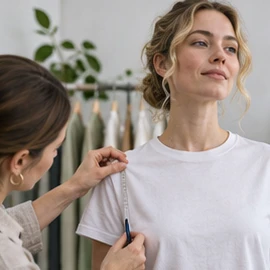
GSM is fabric weight per square metre. It helps compare similar fabrics. A heavyweight tee may feel more substantial, while a lightweight tee may drape more freely. Check chest width and body length on the size chart. Compare the garment to a sample you already wear and measure it flat.
Check the smallest size and the hardest colour
Measure between the seams on the smallest size. A 28 cm wide adult design may need a separate scale for youth sizes. Check a dark colour for the white underbase or pretreatment your print method requires. Check marls separately because their fibre blend can differ.
Order a sample and keep the settings
Write down the garment code, colour, size, artwork dimensions, placements and any press or embroidery settings. Wash a finished sample and compare it with the original before releasing the purchase order.