

GUIDES
Organic clothing, printing and embroidery.
Learn how organic cotton is made, choose the right blank and test your print or stitch-out before ordering in bulk.
Organic cotton, from fibre to finished garment
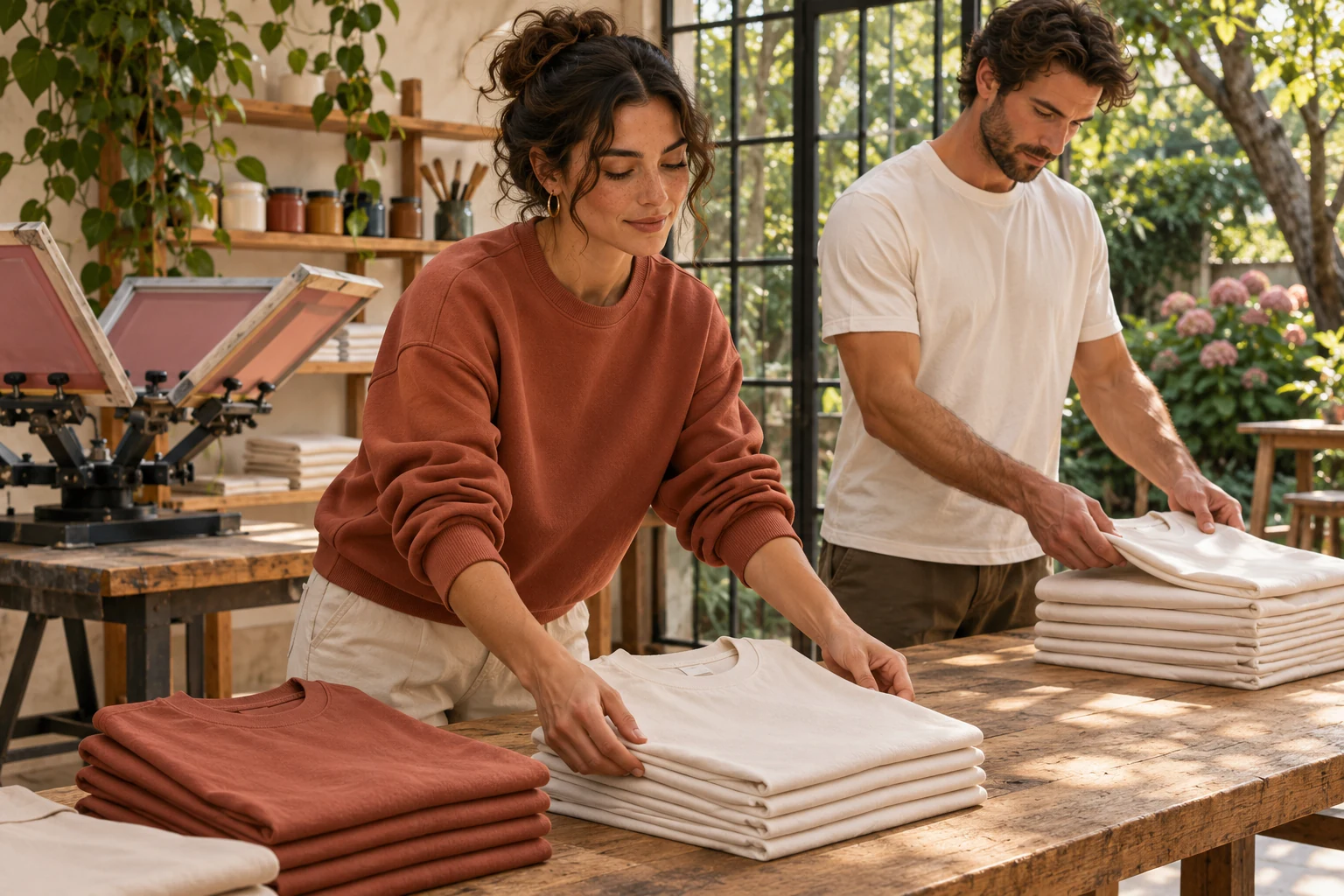
Printing on organic cotton
Choose an organic cotton blank that suits your artwork and print process.
Read the guide ↗100% organic cotton vs organic blends
Compare organic fibre content, fabric weight and finishes when choosing wholesale blanks.
Read the guide ↗Organic clothing certification for printers
Understand what to check before making organic claims on printed garments.
Read the guide ↗How to buy organic blanks wholesale
Build a size run, compare samples and calculate the cost of printing organic clothing.
Read the guide ↗Organic cotton hoodies for printing
Compare cotton face fabric, fleece weight and artwork placement for organic cotton hoodies.
Read the guide ↗Organic T-shirt weights for print runs
Compare lightweight, midweight and heavyweight organic cotton T-shirts for UK wholesale orders.
Read the guide ↗What is organic clothing? From fibre to finished blank
Understand organic cotton, organic blends, in-conversion cotton and what fibre labels tell you about a garment.
Read the guide ↗How to choose the right organic blank for printing or embroidery
A practical buying checklist for organic cotton T-shirts, hoodies, sweatshirts and polos.
Read the guide ↗How to embroider organic cotton blanks
Choose backing, topping, stitch density and placement for organic cotton tees, polos and fleece.
Read the guide ↗Screen printing on organic cotton
Choose a print surface, test the underbase and check cure before a wholesale run.
Read the guide ↗DTG printing on organic cotton T-shirts
Prepare a smooth print surface, test dark-garment pretreatment and check fine artwork.
Read the guide ↗DTF transfers on organic cotton and blends
Set up a heat press, avoid seam marks and test adhesion on the exact blank.
Read the guide ↗How to wash-test printed and embroidered organic clothing
Check shrinkage, print adhesion, colour and embroidery stability before selling a decorated garment.
Read the guide ↗Starting an organic clothing brand in the UK
Plan samples, product descriptions, wholesale reorders and the true cost of your first organic cotton collection.
Read the guide ↗Your first wholesale T-shirt order
A simple buying plan for your first print run.
Read the guide ↗How to choose a blank T-shirt
Compare everyday, premium and oversized blanks before you commit.
Read the guide ↗How to cost your first T-shirt drop
Work out what every sellable shirt needs to earn.
Read the guide ↗Screen printing, DTF or DTG?
Know what to ask your printer before choosing a blank.
Read the guide ↗Printing, materials and selling.
Screen printing on blank clothing
Pick a smooth print face and keep repeat orders consistent.
Read the guide ↗DTF printing on tees and hoodies
Direct-to-film transfers work well for short runs and detailed artwork when the garment tolerates the press.
Read the guide ↗DTG printing on cotton blanks
A smooth cotton face is a useful starting point for direct-to-garment printing.
Read the guide ↗Heat transfer vinyl on blank garments
Use garment-compatible HTV for names, numbers and small batches.
Read the guide ↗Sublimation on polyester clothing
Choose a light polyester blank when you want dye to bond into the fibre.
Read the guide ↗Printing on polyester and technical fabrics
Test heat tolerance and colour migration before committing to a run.
Read the guide ↗
Cotton, ringspun cotton and combed cotton
Learn what the yarn can tell you about the surface and feel of a blank.
Read the guide ↗What does GSM mean on a garment?
Use fabric weight to narrow the search, then check the cut and finish.
Read the guide ↗Brushed fleece, French terry and sweatshirt fabrics
The inside determines warmth and feel; the face determines where your ink or transfer lands.
Read the guide ↗How to test blank garments before a print run
A small, documented sample run catches sizing, adhesion and care problems before they spread.
Read the guide ↗How to start a UK clothing business
Start with one customer group, one blank and a repeatable fulfilment process.
Read the guide ↗Selling a clothing range on Etsy
Build a small, clearly described range that fits Etsy’s current seller and creativity rules.
Read the guide ↗How to sell clothing on eBay UK
Use clear variation listings for styles with a stable size and colour range.
Read the guide ↗Selling clothing on Amazon UK
Prepare product identifiers, variation data and fulfilment before submitting a new range.
Read the guide ↗Setting up a clothing store on Shopify
Use your own storefront to control the collection, sizing and brand experience.
Read the guide ↗Launching apparel on TikTok Shop UK
Pair a clear product listing with honest video that shows fit and print detail.
Read the guide ↗Selling a clothing line on Depop
Show the garment in use and disclose how it is made or sourced.
Read the guide ↗How to market a clothing drop
Use fit, fabric and proof of print quality to make a first drop easier to buy.
Read the guide ↗How to price a small clothing run
Use a per-unit cost model that includes waste and fulfilment.
Read the guide ↗Planning sizes and colours for a first drop
Buy a narrow initial range and preserve room to reorder.
Read the guide ↗Photographing clothing for online sales
Make colours, fit and details easy to compare.
Read the guide ↗Email marketing for a clothing launch
Give subscribers a useful reason to join and set a predictable email schedule.
Read the guide ↗